Over 300 dead, power hit in Himachal monsoon fury
Monsoon fury in Himachal claims over 300 lives, disrupts power supply since June
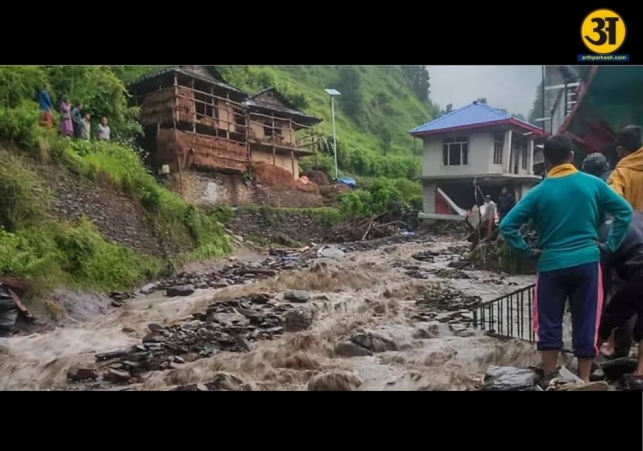
Torrential monsoon rains have battered Himachal Pradesh since June, leaving more than 300 people dead, thousands stranded, and essential services badly hit. The state continues to struggle with blocked roads, disrupted electricity, and broken drinking water schemes as heavy downpours show no sign of stopping.
Roads, power, and water supply paralysed
According to the Himachal Pradesh State Disaster Management Authority (SDMA), as of Wednesday evening, 582 roads remain blocked across the state. Among them are two crucial national highways, NH-03 and NH-305, cutting off major connections in the region. Kullu district alone has reported 166 road blockages, making travel nearly impossible for residents and relief workers alike.
The impact on electricity has been severe. A total of 1,155 electricity distribution transformers (DTRs) are out of service across Himachal. Kullu and Mandi are the worst affected districts. In Kullu, 841 transformers have failed, particularly in Lug Valley, Manikaran, and Larji areas. Mandi district has reported 295 transformers down, leaving entire villages in darkness.
Water supply systems have also collapsed under the pressure of the monsoon. The SDMA reports that 346 schemes are currently disrupted. Kullu tops the list with 88 water supply projects damaged, while Mandi has 64 out of service. For thousands of households, this means no reliable access to safe drinking water.
The situation has put an immense strain on local administrations, which are trying to restore basic services despite heavy rains and frequent landslides. Emergency shelters have been set up to house stranded travellers and families who lost their homes in landslides and flash floods. Authorities warn that more disruption could follow, as weather forecasts continue to show unstable conditions.
Death toll crosses 300, districts worst hit
Since June 20, the ongoing monsoon havoc has claimed 310 lives. The SDMA report explains that 158 deaths were directly caused by rain-related events, while another 152 people lost their lives in road accidents that were linked to the poor weather.
The rain-related fatalities include those killed in landslides, flash floods, and house collapses. Drowning incidents and electrocutions have also added to the toll. Among districts, Mandi reported 29 rain-related deaths, Kangra 30, Chamba 14, Kinnaur 14, and Kullu 13. At least 19 people have died in landslides and flash floods alone, while drowning claimed 33 lives.
The road accident toll is equally alarming. With slippery roads, low visibility, and debris from landslides, driving has become highly dangerous. Fatal crashes since June have claimed 22 lives each in Chamba and Mandi, 19 in Kangra, 16 in Solan, and 15 in Shimla. Other districts such as Bilaspur (7 deaths), Kinnaur (14 deaths), and Kullu (13 deaths) have also suffered tragic accidents.
The SDMA’s State Emergency Operation Centre noted that heavy rainfall in Kullu, Mandi, Kangra, and Shimla has made restoration efforts extremely difficult. Workers trying to clear blocked roads or fix transformers are constantly at risk due to ongoing rain and new landslides. Relief agencies are struggling to reach remote villages where food supplies and medical aid are urgently needed.
District administrations have been instructed to give priority to restoring electricity and water supply in the worst-hit areas. However, officials admit that progress is slow because each new spell of rain undoes earlier repair work.
Human suffering and warnings ahead
Behind these numbers lies widespread human suffering. Families have been displaced after landslides destroyed their homes. Farmers have lost crops and livestock. Businesses that rely on road connectivity, such as small hotels and shops in tourist towns, have been paralysed. With electricity and water supply cut in many areas, even daily life for survivors has become a struggle.
Emergency shelters in schools and community halls are providing some relief, but living conditions remain tough. Many people have been unable to return to their homes due to safety risks. In areas like Kullu and Mandi, where roads are blocked, stranded travellers have been stuck for days, relying on relief teams for food and water.
The SDMA has also warned that more casualties cannot be ruled out. With several weeks of the monsoon still left, the state remains on high alert. Officials are urging people to avoid unnecessary travel, especially on mountain roads prone to sudden landslides.
ALSO READ: INS Himgiri and INS Udaygiri: India commissions indigenous stealth frigates to Navy
ALSO READ: PM Modi’s vision sparks a new era in India’s space journey
Environmentalists have raised concerns that reckless construction, deforestation, and poor planning have worsened the scale of the disaster. They point out that widening of mountain roads and construction on fragile slopes make the region more vulnerable during intense monsoon rains.
For Himachal Pradesh, which depends heavily on tourism, the damage is particularly devastating. August is normally a busy season, but with roads blocked and safety risks high, tourists have stayed away. Local economies in districts like Kullu, Shimla, and Kangra have suffered heavily as a result.
The government is now under pressure to speed up relief work, restore essential services, and provide compensation to affected families. But with rains still lashing the hills, immediate recovery looks challenging. For the people of Himachal, this year’s monsoon has brought not just destruction but also deep anxiety about what the future might hold if such extreme weather continues to intensify year after year.
Related News